
When a Nursing College Gets Taken Seriously
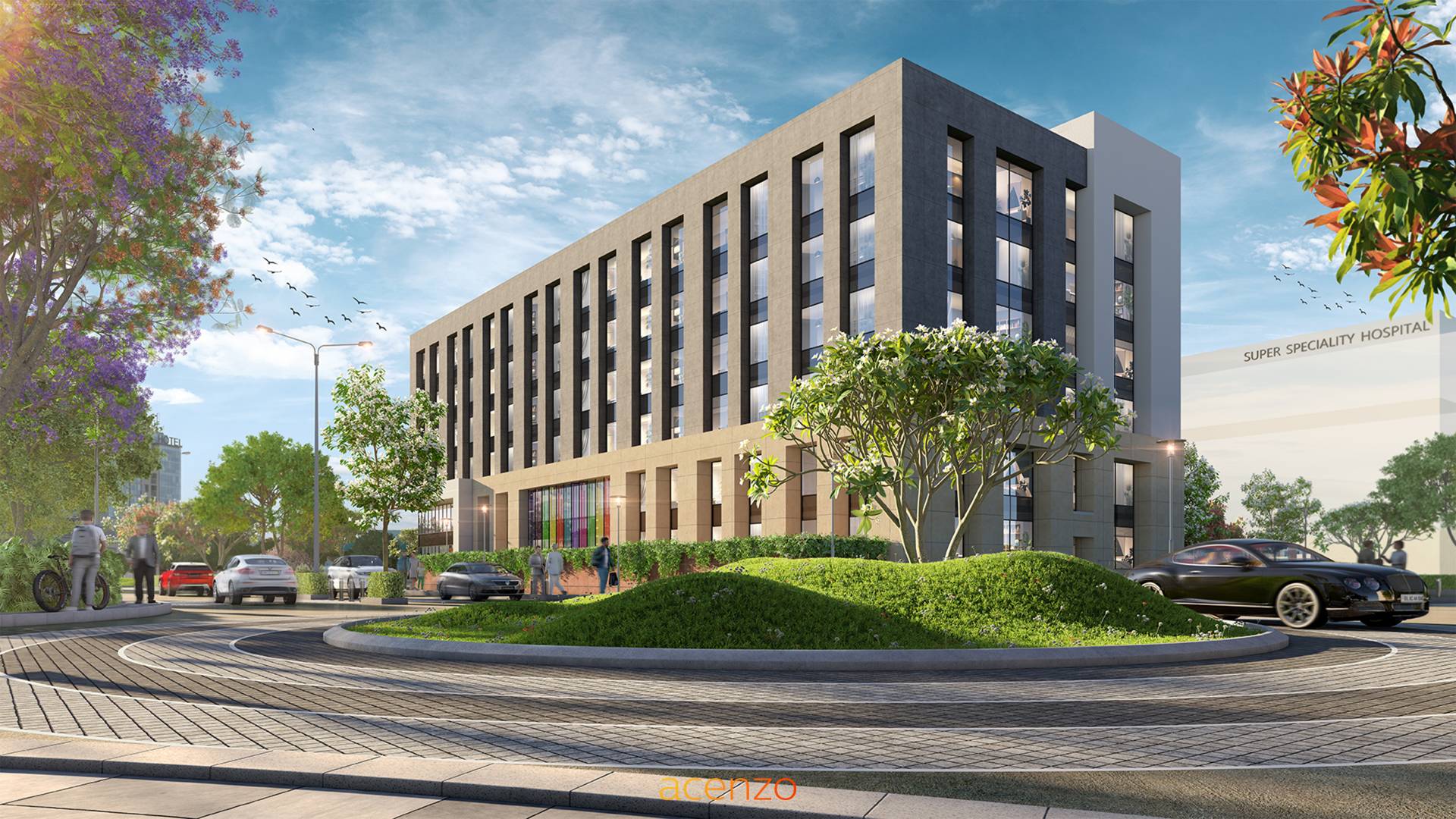
There is a standard brief that gets handed to architects designing nursing colleges in India. It involves a room count, a bed count in the hostel block, a list of spaces mandated by the Indian Nursing Council, and a budget that leaves little room for anything beyond compliance. The result, repeated across hundreds of campuses, is a building that funcitons as a container. Classrooms on one side, labs on another, an administration block somewhere in between. It passes inspection. It serves its purpose. It doesn't do much else.
We were asked to do something different in Varanasi.
The Project
This nursing college is the first building on an upcoming healthcare campus being developed by a healthcare group The site will eventually carry multiple institutions and facilities. This block sets the tone for everything that follows.
The brief was clear from early conversations: this should not look or feel like a typical nursing college. The promoters understood that the quality of infrastructure sends a signal, to prospective students, to faculty, to the medical community in the region. A well-designed campus attracts better students. Better students become better nurses. Better nurses change how a hospital actually functions.
That chain of logic shaped every decision we made.
The Planning Approach
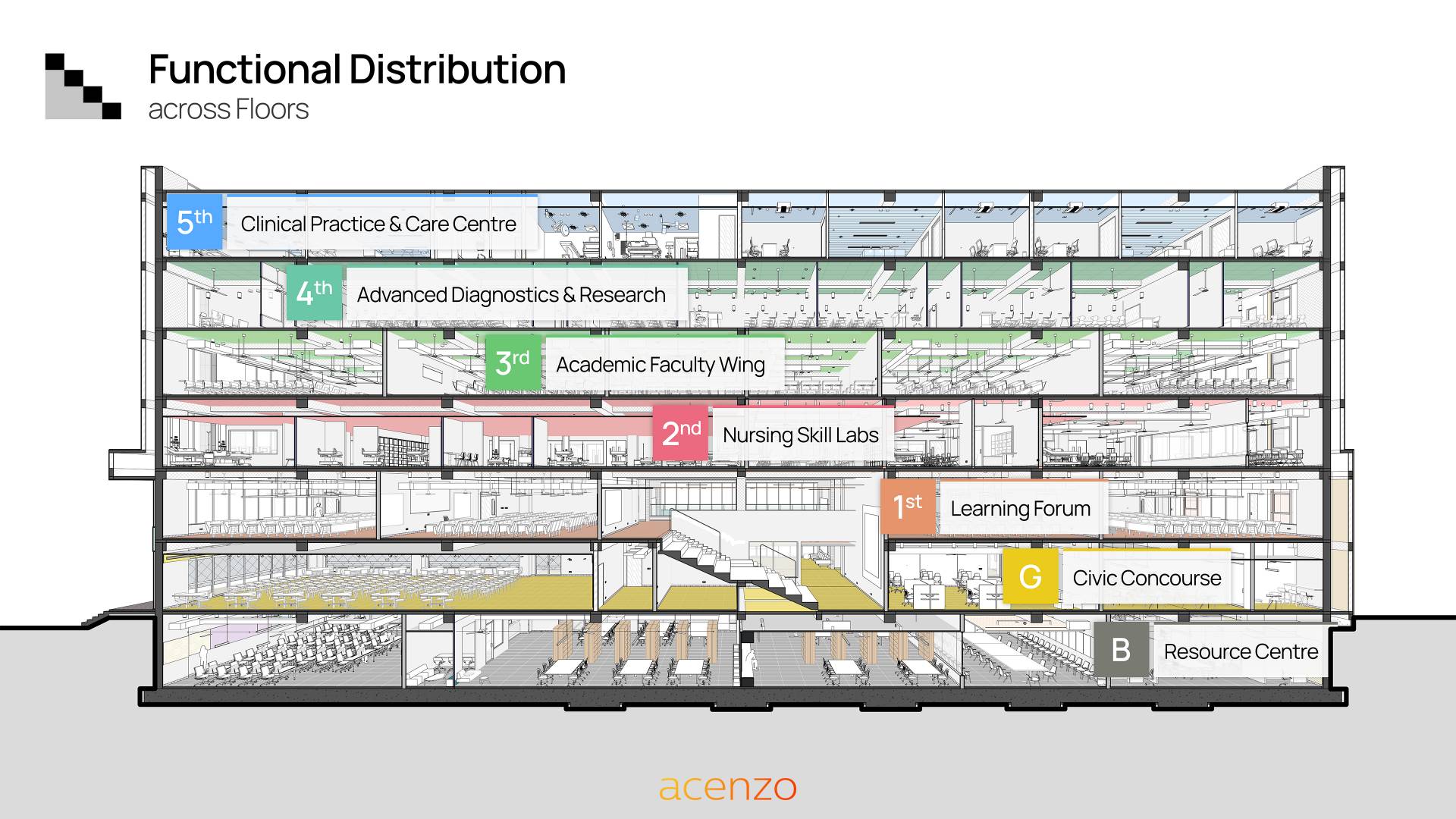
The building is organised floor by floor with deliberate functional separation.
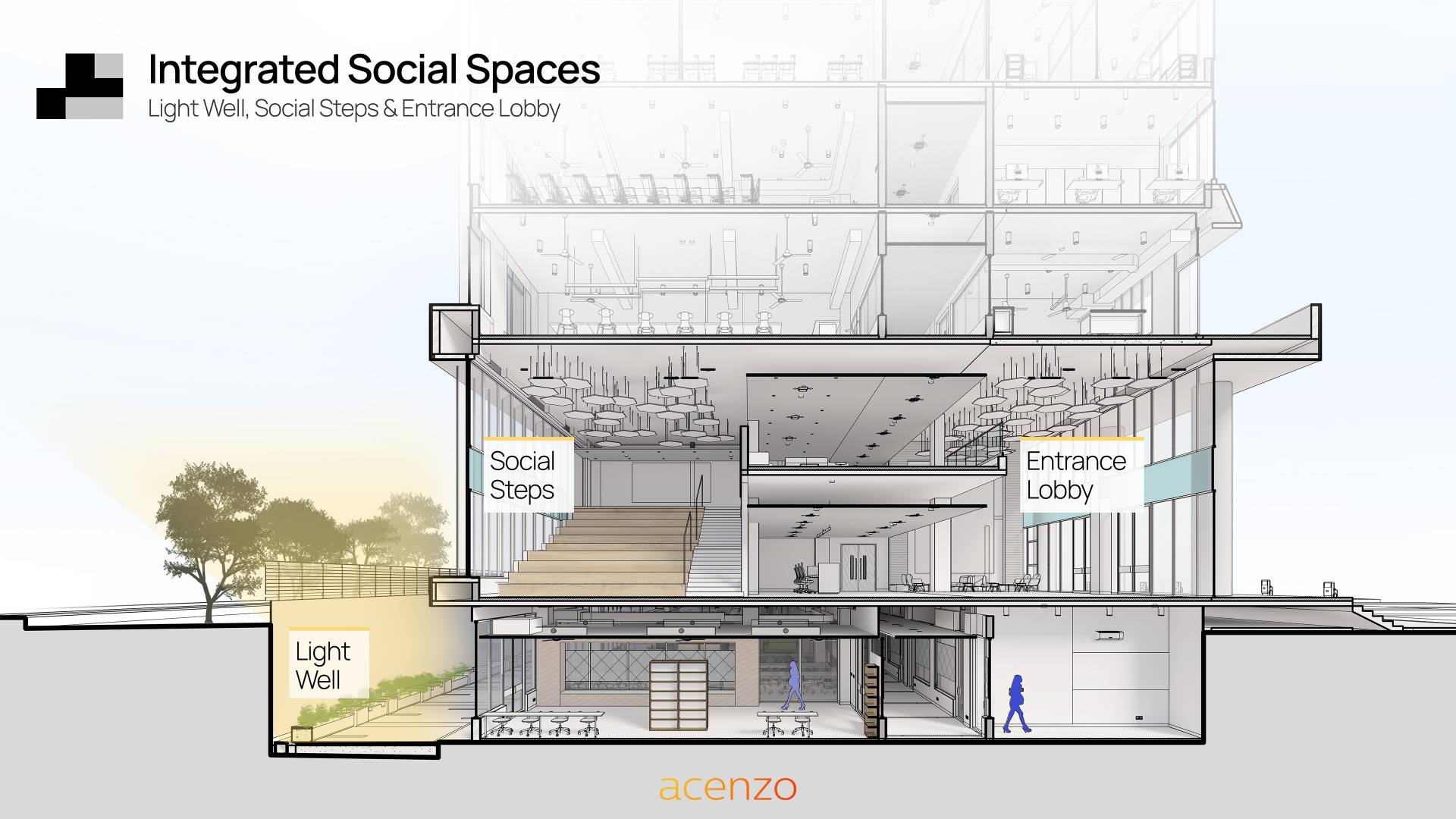
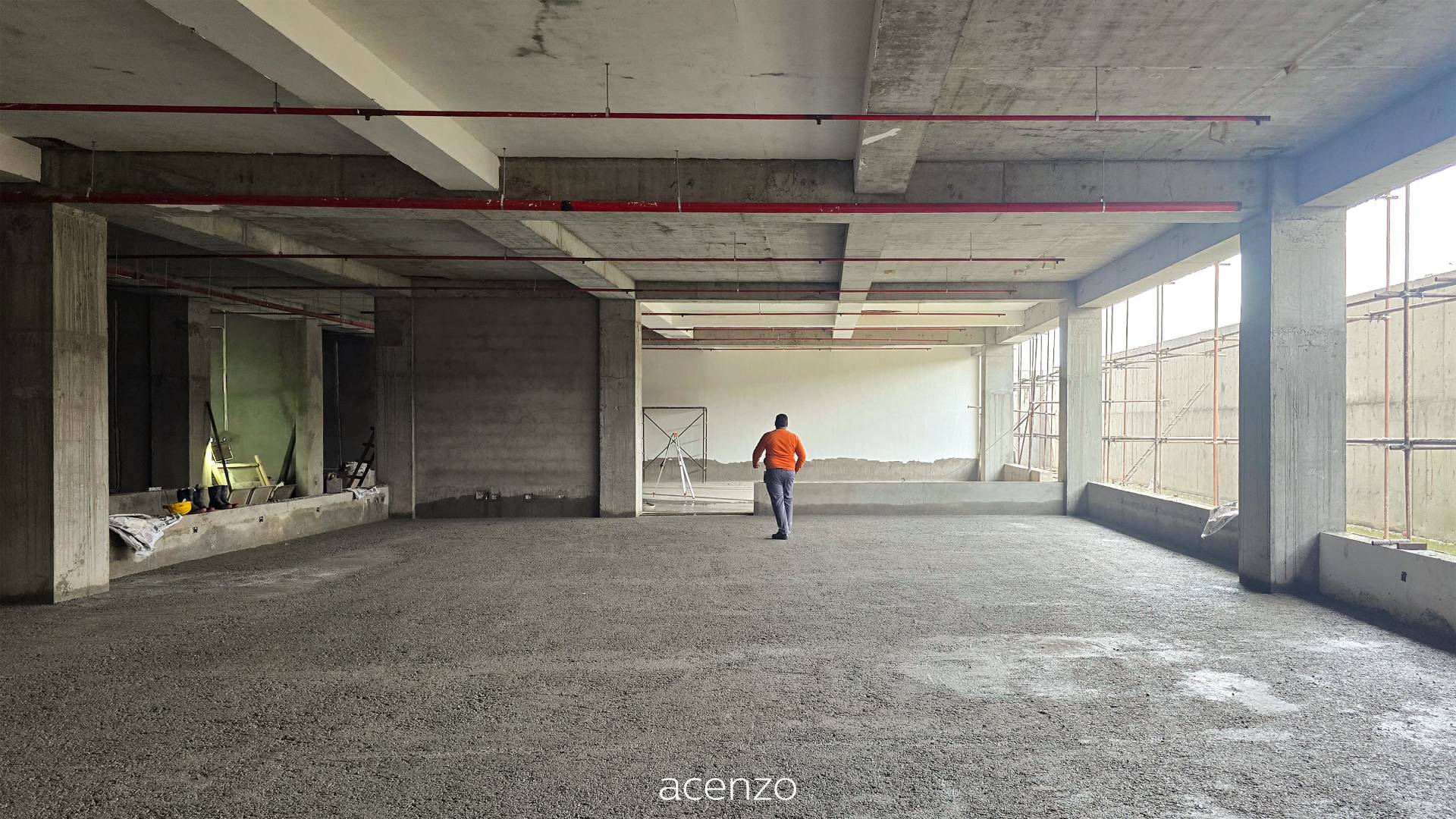
The basement holds the Resource Centre, a library and study facility with a light well that draws natural light underground. This was a conscious choice. Basement spaces in institutional buildings are typically afterthoughts, poorly lit, poorly ventilated, used for storage or overflow. We wanted the library to feel like a place worth spending time in.
The ground floor is the Civic Concourse, the social and circulation heart of the building. This is where arrival happens, where students move between floors, where informal interaction occurs between classes. We gave it volume and light rather than treating it as a lobby to pass through quickly.
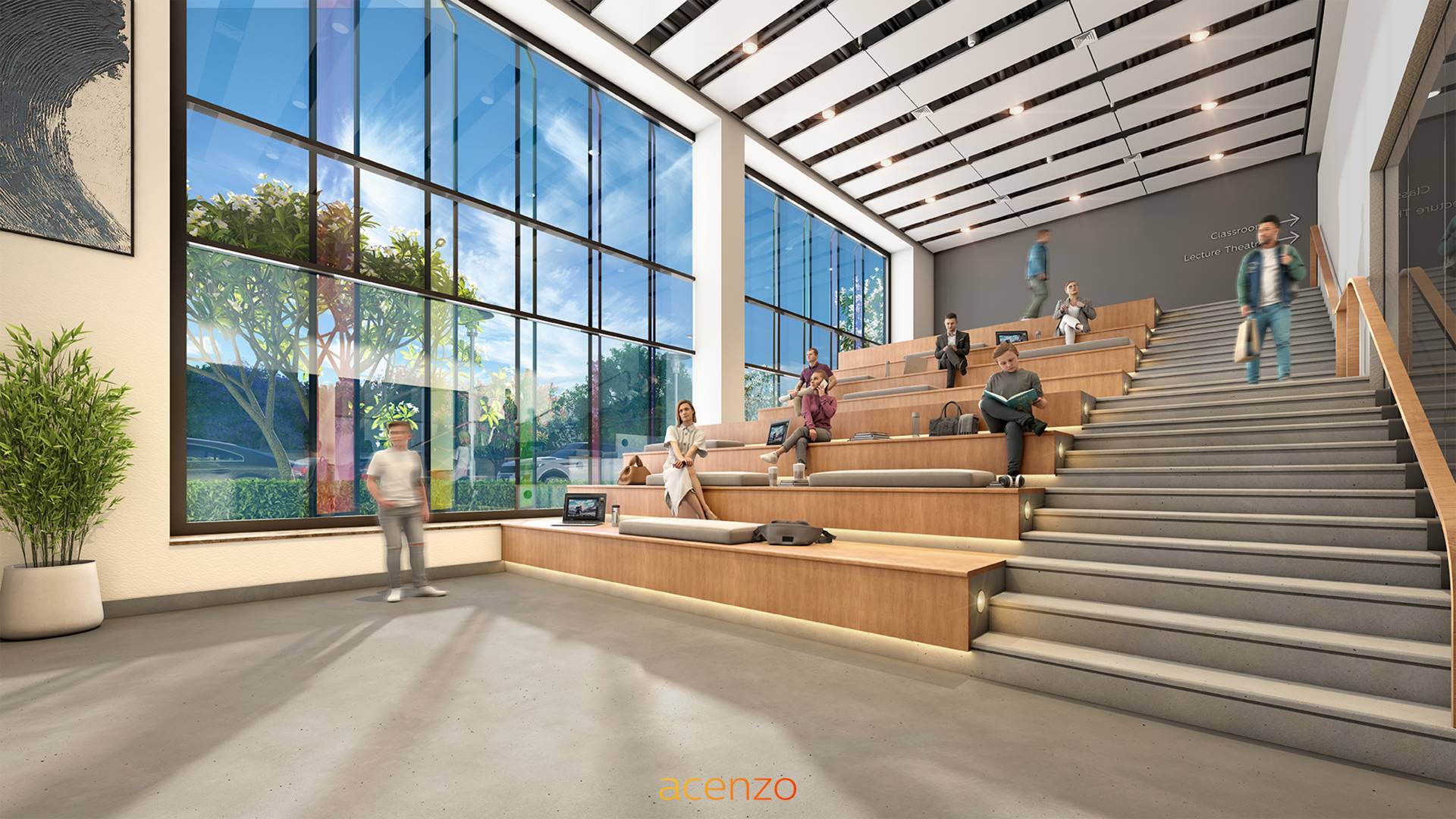
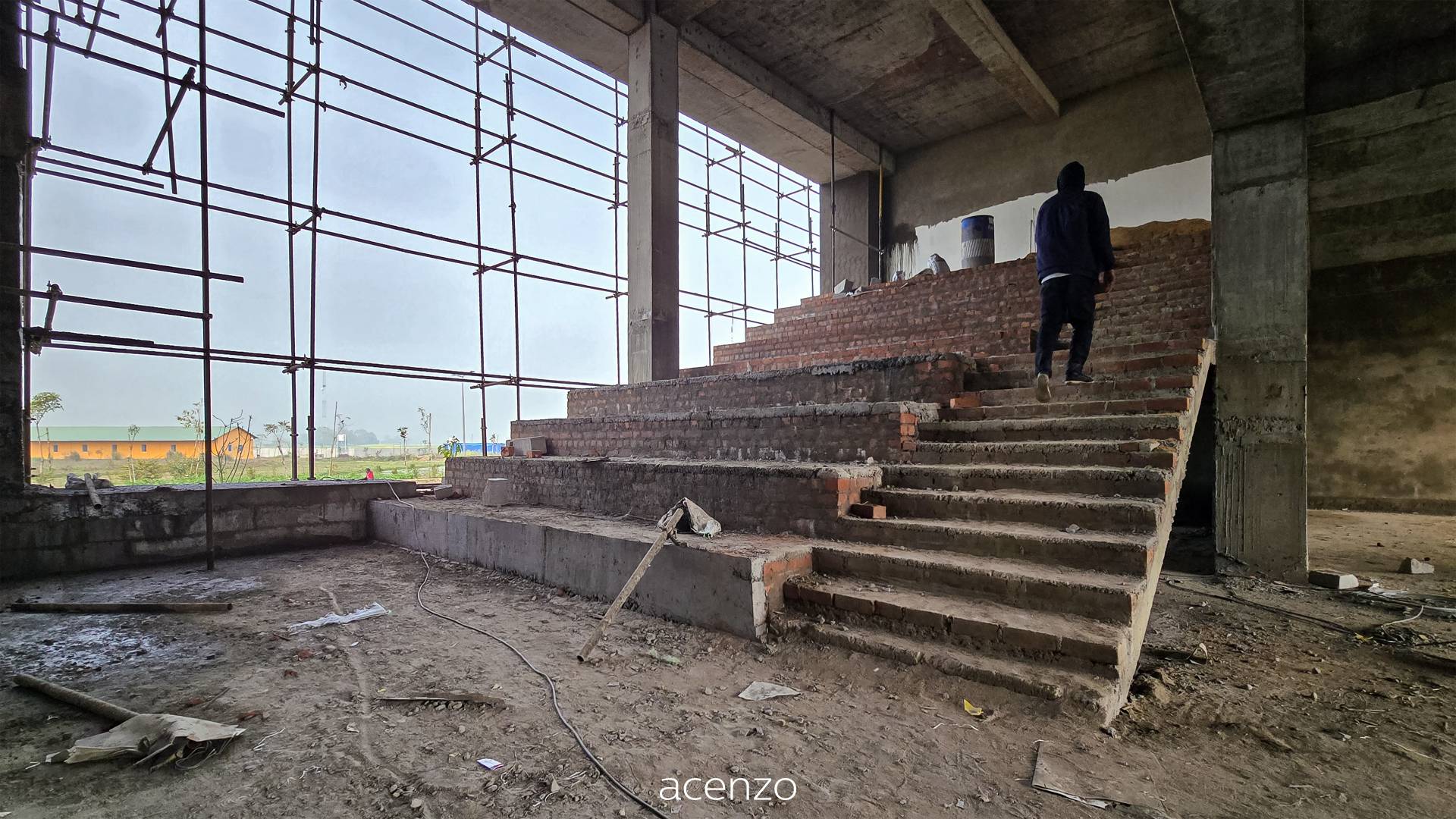
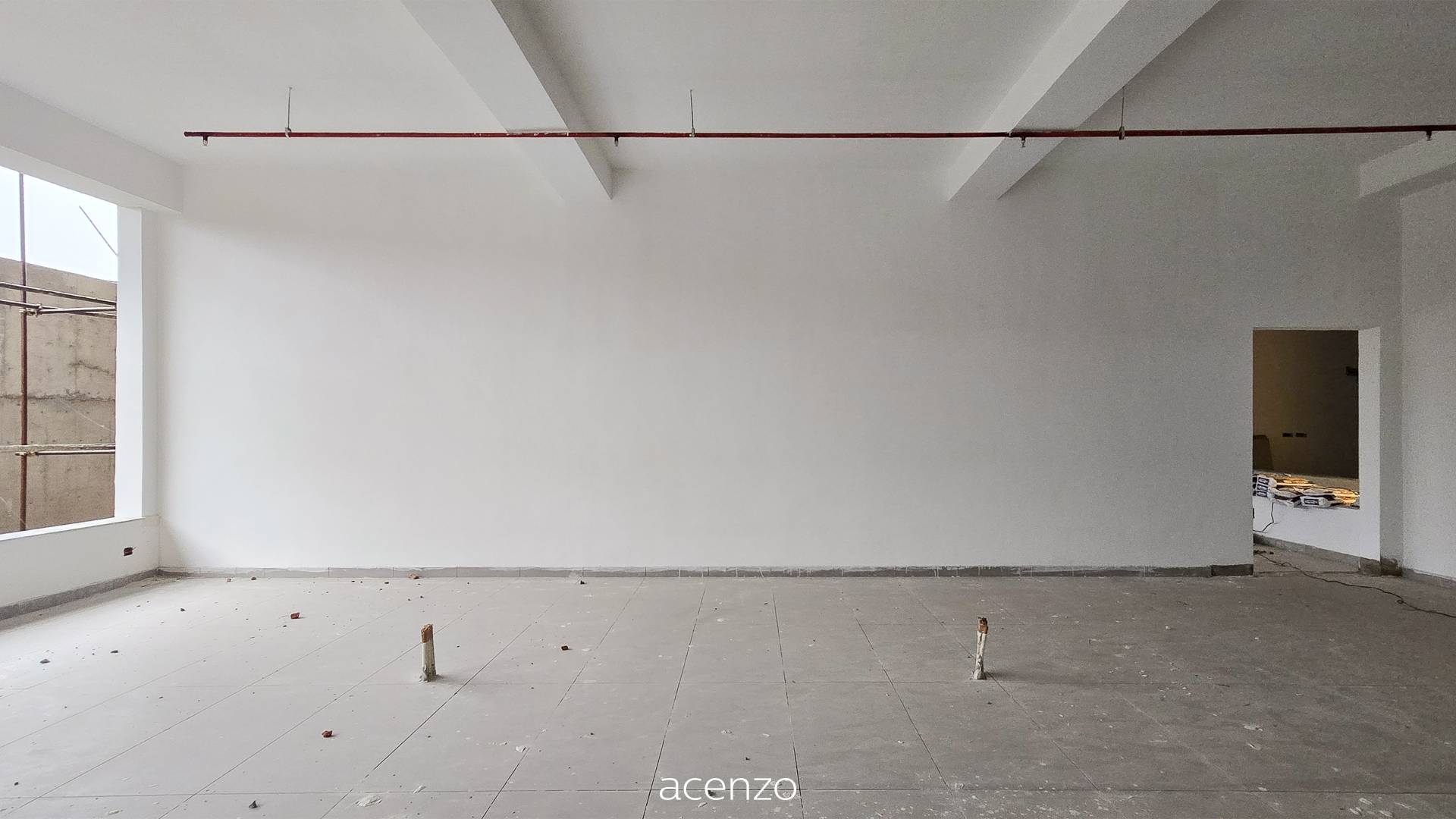
The first floor is the Learning Forum. Lecture halls and seminar spaces, but organised around a central social steps feature that doubles as informal seating, a gathering space, and an overflow learning area. The full-height north-facing glazing here was not an aesthetic decision. North-facing light is consistent, diffuse, and glare-free. For a space used for learning from early morning onward, that quality of light matters practically.
The second floor houses Nursing Skill Labs, where clinical procedures are taught in simulation environments before students encounter real patients.
The third floor is the Academic Faculty Wing, with faculty offices, meeting rooms, and research spaces separated from the student floors to allow focused work without constant interruption.
The fourth floor carries Advanced Diagnostics and Research facilities.
The fifth floor is the Clinical Practice and Care Centre, the most specialised floor in the program, where the training closest to actual hospital conditions takes place.
This stacking is not accidental. It moves from public and social at the base to increasingly specialised and focused toward the top. A student's journey through the building across four years mirrors the program itself.
The Pedagogy Argument
Architecture for education is most effective when it supports multiple modes of learning simultaneously. Formal instruction in lecture halls is one mode. Small group discussion is another. Independent study is another. Chance conversations in corridors and on staircases are another, and research consistently shows these unplanned interactions carry significant learning value.
Most institutional buildings are designed for the first mode only. Fixed seating, fixed orientation, fixed program. Everything else happens despite the building rather than because of it.
The social steps in this block are the clearest expression of our intent here. They are not a design feature added for visual interest. They are a space that accommodates a lecture from above, a study group of four in the middle, a single student reading at the edge, and a general gathering of fifty during orientation week. The same space, multiple configurations, no fixed hierarchy.
The light well feeding the basement library follows the same logic. Natural light in a study environment is not decoration. It affects alertness, mood, and the quality of sustained attention. We went to the effort of engineering it because we believe it will be used by students for the next thirty years and the investment is worth it.
Why This Matters Beyond One Building
India's healthcare system faces a significant staffing challenge. The nurse-to-patient ratio in most public hospitals remains far below WHO recommendations. Private healthcare is expanding rapidly but the pipeline of trained clinical staff is not keeping pace.
Nursing colleges are part of the solution. But the quality of those colleges varies enormously. At one end, institutions designed with genuine care for the learning environment. At the other, buildings that meet the minimum requirement and nothing more.
The environment a student trains in shapes professional identity. A student who spends four years in a well-designed, well-maintained, well-lit building learns implicitly that her work is valued. That signal matters. It affects retention, professional pride, and the standard of care she eventually delivers.
We are architects. We cannot fix systemic healthcare staffing problems. But we can build the places where the next generation of nurses is trained, and we can build them properly.
On Being the First Building
There is particular responsibility in being the first structure on a new campus. Every building that follows will be read in relation to this one. The scale, the material palette, the quality of detailing, the relationship between indoor and outdoor space. All of it establishes an expectation.
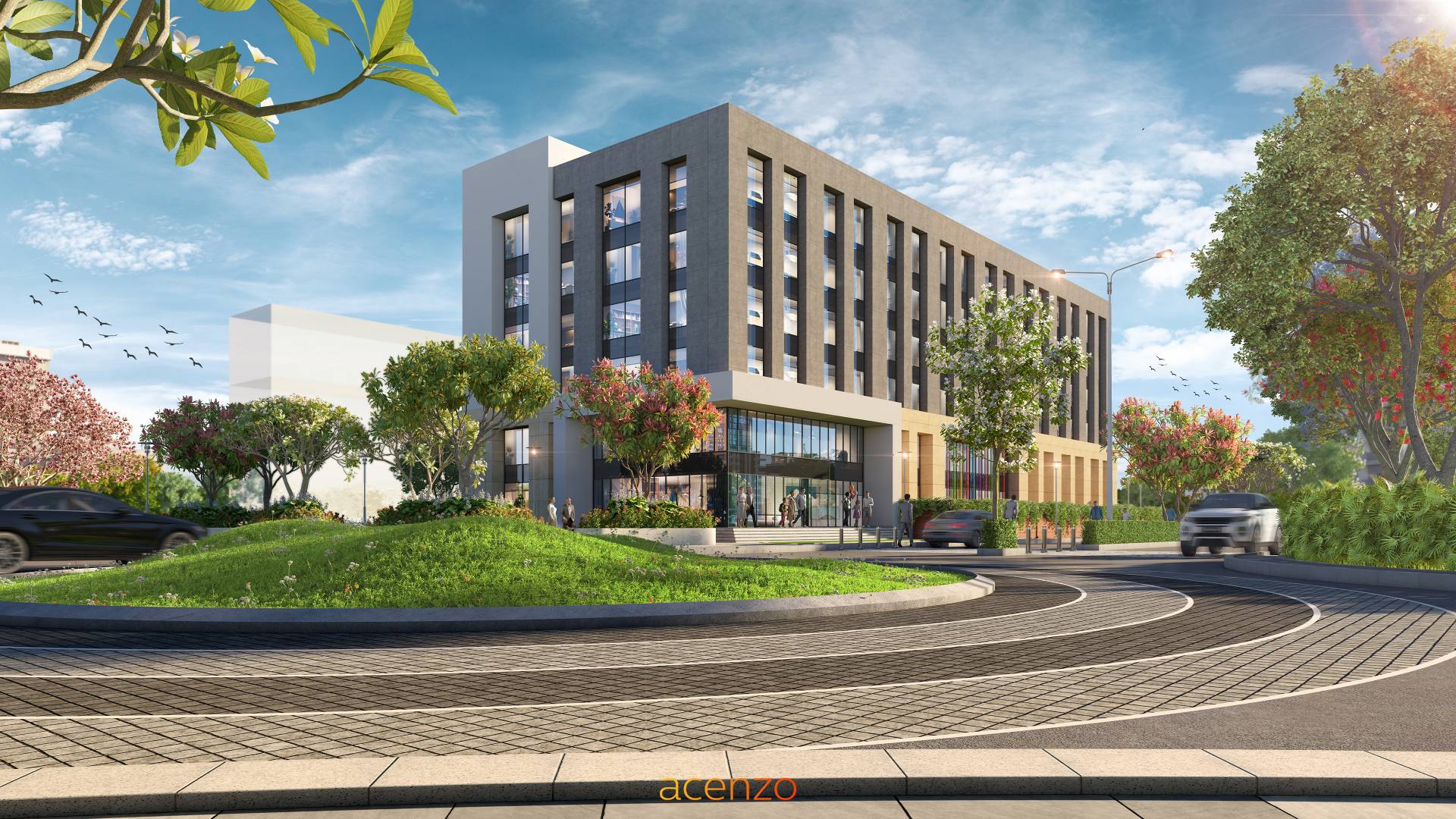
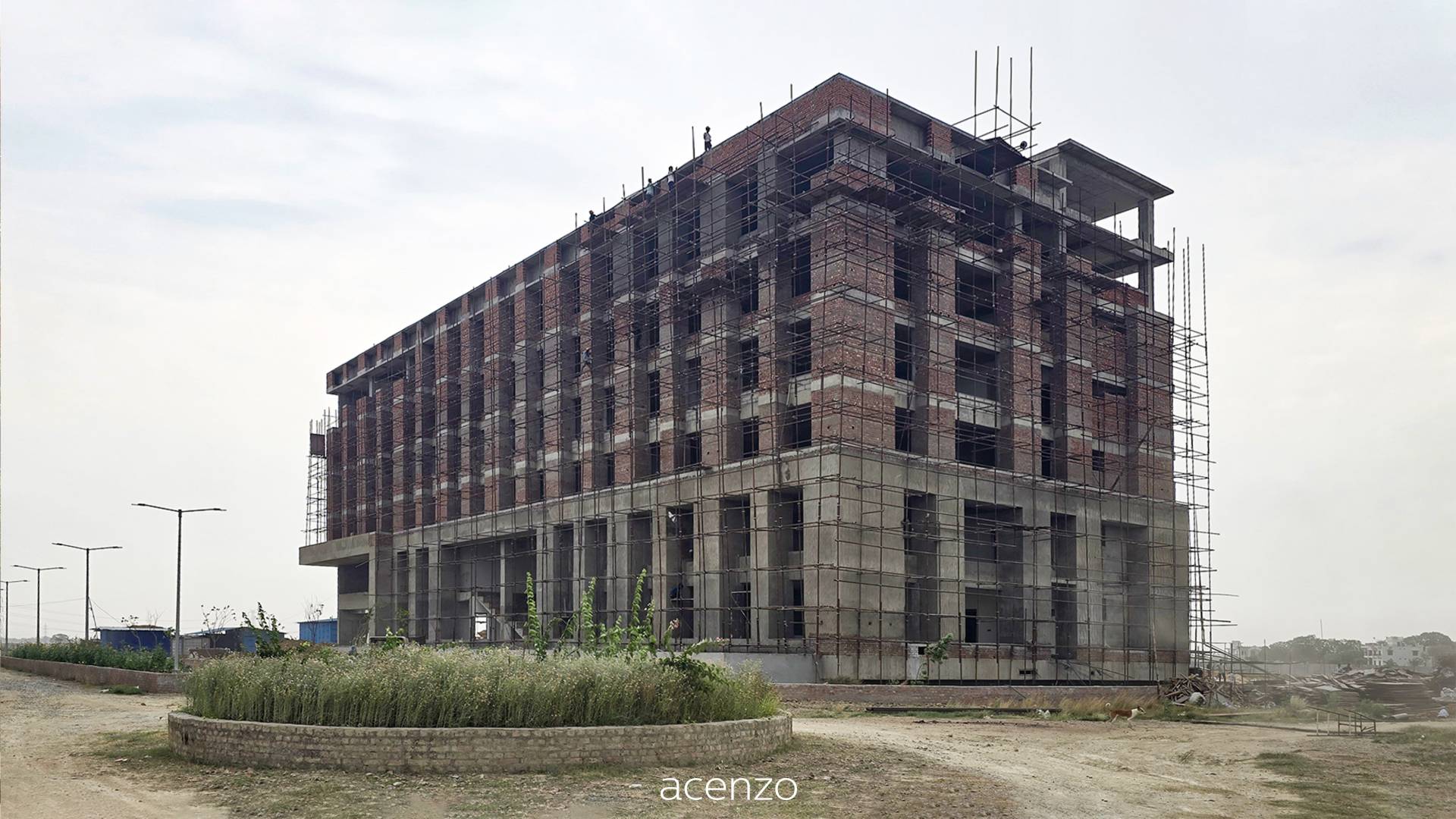
We were conscious of this. The brick facade, the proportions of the window openings, the entrance sequence with the landscaped roundabout, these were decisions made with the full campus in mind, not just this block.
When the campus is complete, this building should feel like it belonged from the beginning. Not like a placeholder that was eventually surrounded by better things.
Project Information
Project: Nursing College Block, Varanasi
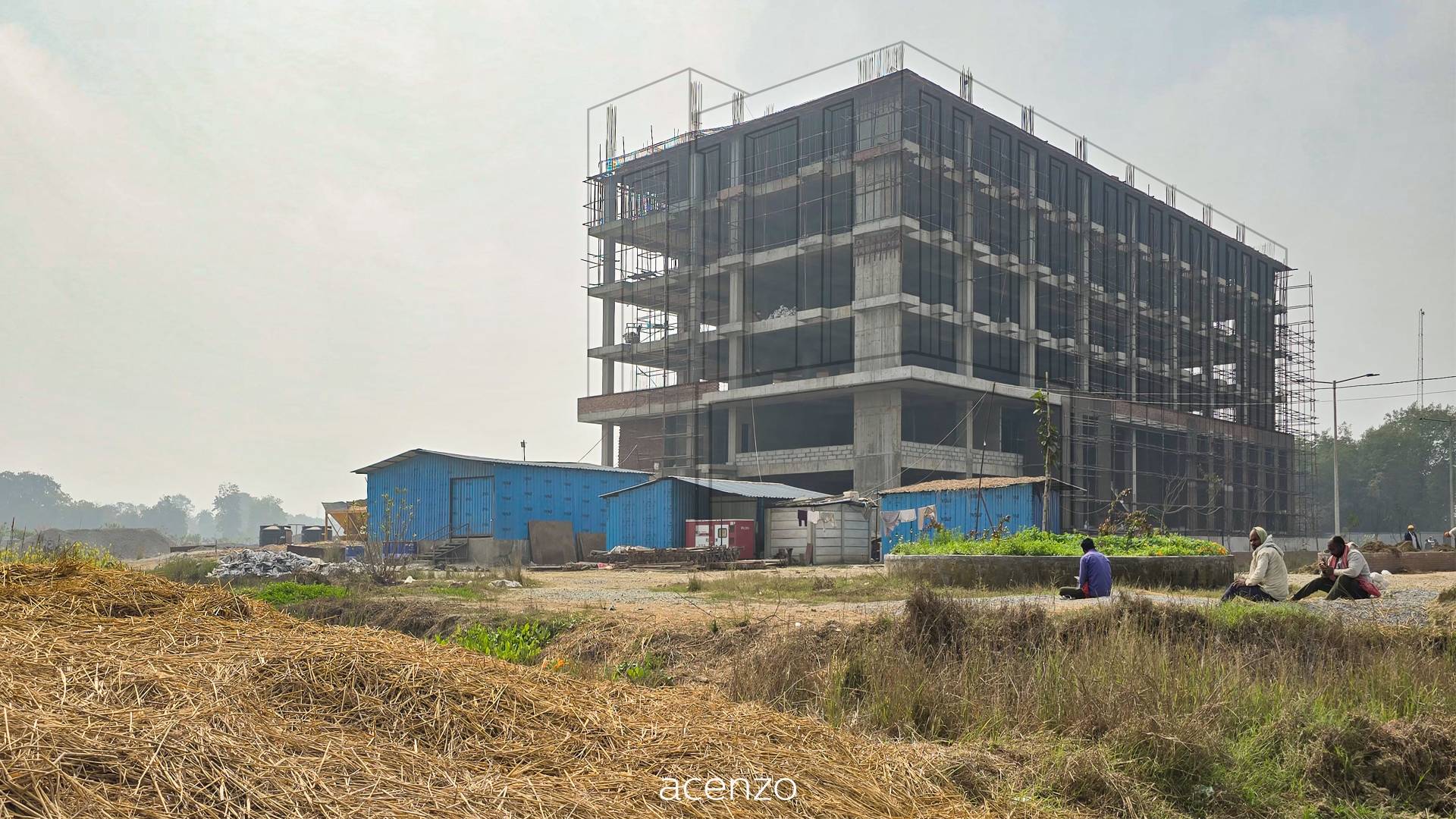
Status: Under Construction
Scope: Architecture, Structure, MEP, Interior Planning, Functional Programming
Firm: Acenzo LLP
Check out our other Latest News
28th Nov, 2025
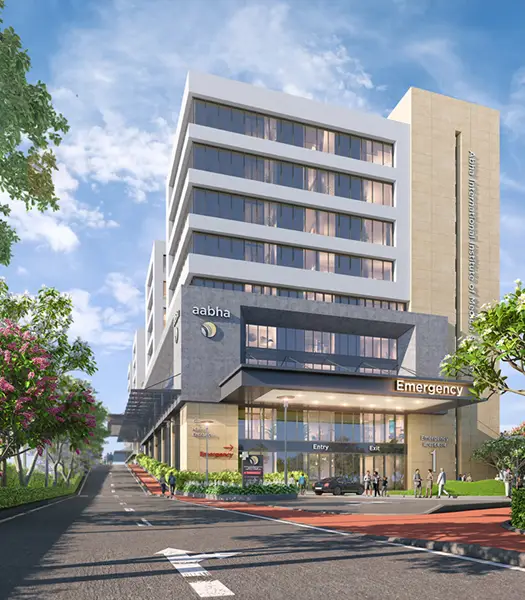
Aabha Hospital is a 500 bed quaternary care centre taking shape in Hisar. Close to four lakh square feet of space designed to bring every major superspeciality together in one continuous system. The idea was clear from the start. Create a hospital where movement is effortless, where services align with care, and where the building […]
14th Dec, 2023
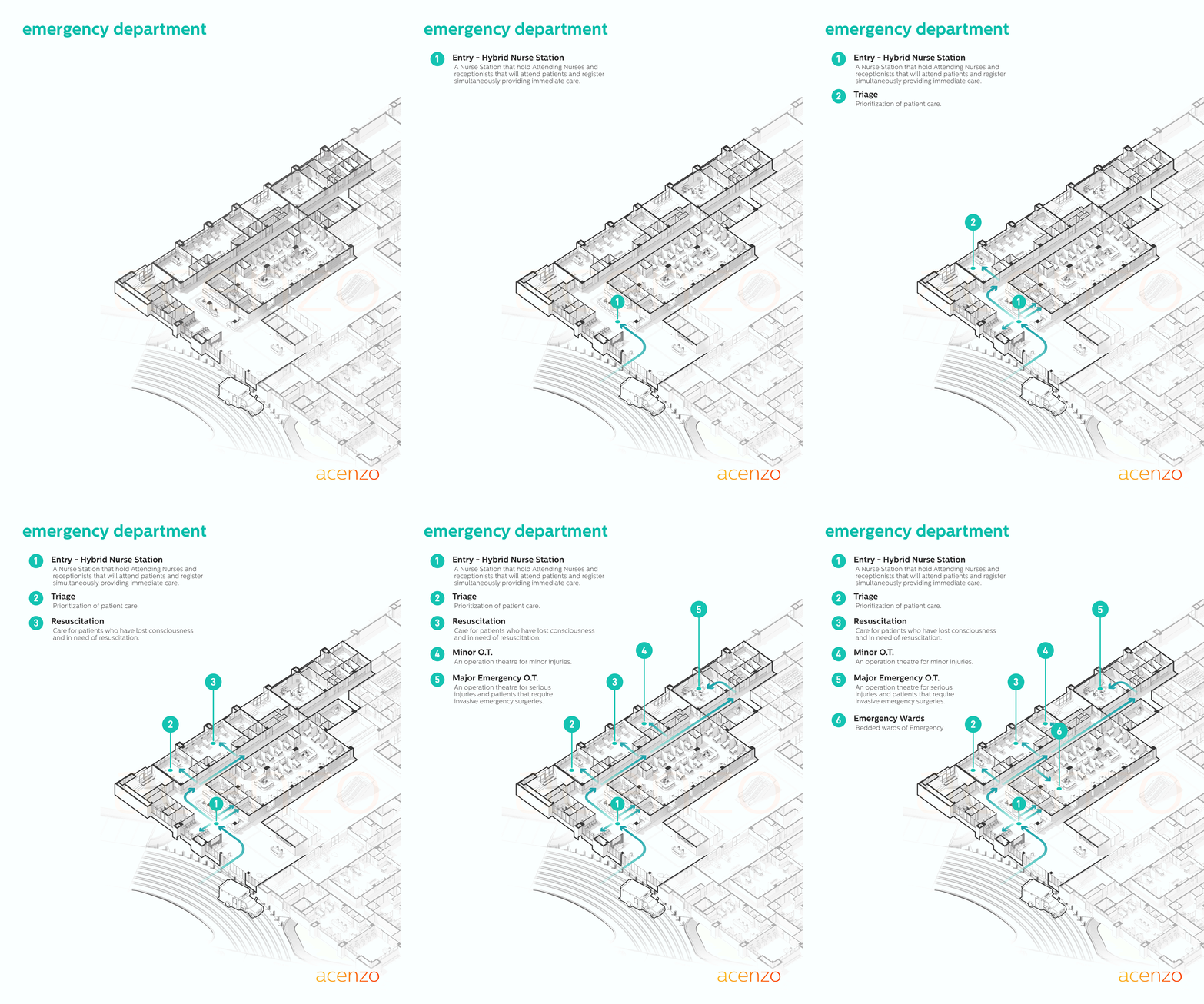
Say goodbye to the traditional regimental design of emergency departments. Today’s patients and diverse staff demand spaces that are as dynamic, inclusive and portray a sense of urgency and privacy at the same time. When we designed this 1500 bed facility for a confidential client in the North […]
14th Dec, 2023
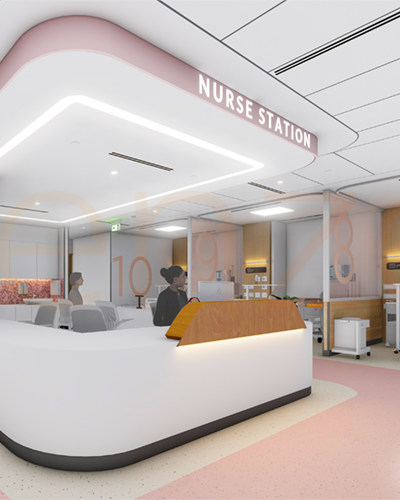
Every life begins with one common journey- pregnancy! The careful planning of the maternity department of a 1200 bed Superspecialty facility in North Indian city includes a warm lobby space, a screening cum first stage ward, 3 well-equipped labor rooms, two C-section operating rooms, separate delivery area for eclampsia cases, a 10 bed intensive care […]
Let’s create something beautiful
Let’s create something beautiful